Fall of Da Nang
The SympathizerThe Fall of Da Nang is recalled as one of the sudden losses that marked the South Vietnamese retreat in March 1975. In the unnamed narrator’s account, the city’s fall is bound to the flight of civilians and the deaths of thousands, making the event a measure of both military collapse and the human cost hidden within it.
Background and Reports
The fall comes amid a succession of reversals. The northern front had collapsed weeks earlier, and the South Vietnamese president had ordered forces defending the Central Highlands to retreat. Da Nang and Nha Trang then fell. The unnamed narrator presents these developments through the reports reaching The General, who had once seemed always able to find something to do but was now sleepless and shaken by the news.
In the privacy of the narrator’s office, the reports were photographed and passed to Man, the narrator’s handler. Their information had a double significance: it documented the erosion of the regime, which the narrator understood as politically encouraging, while also recording suffering that could not be reduced to an intelligence advantage.
Civilian Flight and Loss
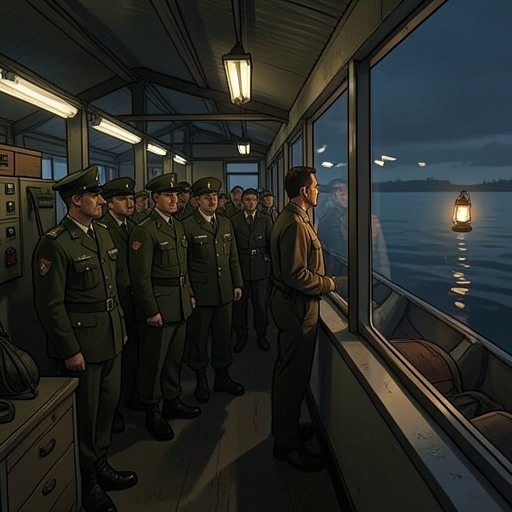
The account’s starkest detail is the civilians’ attempt to escape by barges and boats. In the chaos, South Vietnamese troops shot people in the back as they struggled to flee. The death toll ran into the thousands. The text does not describe the fighting or specify the circumstances of Da Nang’s capture; instead, it gives the city’s fall weight through the desperate escape and the violence visited on those trying to survive it.
The unnamed narrator’s response unsettles any clean division between political allegiance and compassion. The reports pleased the narrator as signs that the regime was weakening, yet the narrator was moved by the civilians’ plight. The thought that the narrator’s mother would have been among the poor if she were alive makes the suffering personal: ordinary people had not chosen the war, nor had they chosen to die of thirst and exposure at sea or to be robbed and raped by their own soldiers.
Narrative Significance
The Fall of Da Nang is therefore presented less as a military episode than as part of a crisis of belief. The General, whose faith in the civilizing mission and the American Way was failing, could scarcely credit the news. The narrator’s repeated inability to believe what was happening conveys the speed and scale of the collapse, while the secret photographs turn the reports into evidence for Man and a record of a regime coming apart.
The event’s moral force comes from the contrast between strategic news and individual vulnerability. The fall signals the weakening of the South Vietnamese government, but the civilians’ deaths expose what that political change means for people with no power over the war. The narrator can welcome the regime’s erosion and still grieve for those caught in its retreat; that contradiction is central to how the event is remembered.